Why Dump Trucks Tip and How We Move Them
Imagine a dump truck at the edge of a construction site, ready to empty its load. The operator raises the bed, but the gravel doesn’t slide out evenly. One side holds on while the other empties, and suddenly that tall truck looks a little less steady. For Mechanicsville dump truck towing, a raised or damaged bed presents a problem we have to understand before we can move the truck.
Because a dump truck doesn’t have to be speeding around a corner to roll over. Sometimes the trouble starts while it’s standing still. And because a rollover can bring work at the site to a halt. It blocks access for other trucks and equipment while the damaged dump truck is dealt with. If gravel or other material spills across the work area, there’s another mess to clear before everyone can get back to the job.
A Few Inches of Lean Can Be Enough
As the bed of a vehicle rises, the truck’s center of gravity rises with it. The weight is now carried much higher above the tires. If that weight shifts toward one side, there’s less room for error before the truck tips.
The ground doesn’t have to look dramatically uneven. One set of tires could settle into soft dirt, or the truck might be parked on a slight slope. Add a load that sticks inside the bed, and the imbalance can become serious. Wet soil, gravel, or debris may hang up rather than slide out as expected.
We’ve also got to consider wind, tire condition, and damage to the suspension. None of those things helps a truck that’s already leaning.
Stuck Beds Are a Problem
A raised bed changes more than the truck’s height. It can still contain material, and the hydraulic system holding it up may be damaged or under pressure. A bent hinge or mounting point makes matters worse.
We don’t treat a raised bed like something we can push back into place. Nobody should get beneath it without proper mechanical support and qualified personnel. And if the load is unstable, moving the chassis before addressing that problem could create another hazard.
The first step is figuring out what is holding the bed up and whether the truck is stable enough for recovery work.
What If the Truck Has Already Rolled?
An overturned dump truck brings a different set of questions. Is the bed still attached? Has the load spilled, or is material trapped against one side? Are there damaged hydraulic components or a compromised frame?
We have to look at the bed and chassis together, not just the side resting against the ground. During dump truck recovery in Mechanicsville, pulling a truck upright without understanding what the raised body and remaining load will do could make the situation worse.
Upright Doesn’t Automatically Mean Towable
Getting the wheels underneath the truck again is only one stage. Heavy-duty dump truck towing near Mechanicsville may still depend on damaged axles, tires, steering, or suspension. If the bed cannot be lowered and secured appropriately, we can’t assume the truck can travel on public roads.
Once the bed is addressed, we also need to check suitable towing connections and determine which wheels can remain on the road. A recovery can end with the truck upright and still leave more work before transportation begins.
Before We Move Anything, We Ask These Questions
For Mechanicsville heavy truck recovery, there’s no single setup that suits every damaged dump truck. We need answers about the equipment and the ground around it:
- Is the truck leaning? A sloped or soft surface changes the plan.
- Where is the material? Stuck or uneven cargo affects balance.
- What is supporting the bed? Hydraulics alone aren’t a safe work support.
- Is anything bent or broken? The hinges, mounts, or chassis may be damaged.
- Can the bed be lowered and secured? The answer shapes the transport options.
Sometimes the right next move is coordinating with qualified repair personnel or arranging load removal. In other cases, we may need a heavy-duty recovery operation before the tow itself. With dump truck towing around Mechanicsville, we don’t decide that from a distance.
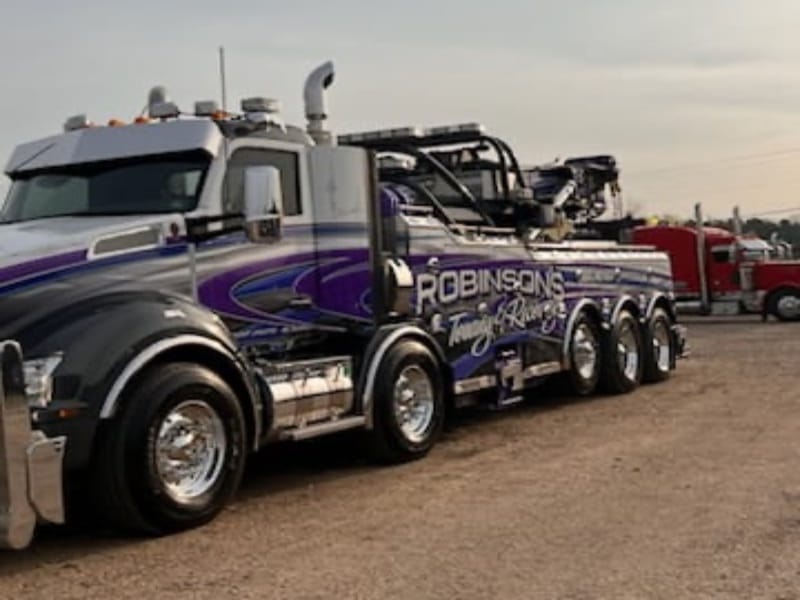
Robinson’s Towing: Mechanicsville Dump Truck Towing that Keeps Job Sites Moving
At Robinson’s Towing & Recovery, our roots in Mechanicsville go back to Mr. Robinson, known as “The Bus Man.” What began with a reputation for bus towing has grown into services for cars, tractor-trailers, heavy equipment, and other vehicles that need towing or recovery.
We also participate in VDOT’s Quick Clearance program, where getting disabled or damaged vehicles out of traffic is an important part of roadway safety. But quick doesn’t mean guessing. We assess the vehicle and the conditions before choosing how to handle it.
When you call us for dump truck towing in Mechanicsville, we’re thinking about more than the truck’s weight. The bed, the load, the surface beneath it, and the damage all matter. We want to know what we’re moving before we try to move it.
Frequently Asked Questions
Why are dump trucks more likely to roll over with their beds raised?
Raising the bed raises the truck’s center of gravity. A slight slope, uneven ground, or shifting material can then make the truck less stable.
Can a dump truck roll over while parked?
Yes. A dump truck can tip while unloading, even when it isn’t moving forward. Uneven ground and material sticking inside the raised bed are common contributing factors.
Can you tow a dump truck with its bed stuck in the air?
Not as a routine road tow. We first need to assess whether the bed can be lowered or properly secured and whether the truck can be transported in that condition.
What if the dump truck has already overturned?
We assess its position, remaining load, structural damage, and stability before planning the recovery. Uprighting the truck and preparing it for towing may require separate steps.
Does the load need to be removed before recovery?
Sometimes. Material that’s unevenly distributed or trapped inside a raised bed may need to be addressed before the truck can be moved.
Can a dump truck be towed after a rollover?
Possibly, but being upright doesn’t automatically make it roadworthy or towable. We need to assess the bed, frame, axles, steering, and wheels before determining how to transport it.