
When the Road Bites Back at Your Tires
Ask any experienced driver what they don’t want happening at 65 mph: a tire blowout is almost always near the top of the list. Especially on stretches where traffic stays tight and shoulders don’t give you much room. That kind of situation shows up more than most drivers expect on I-295, and it often turns into an I-295 semi towing call in a matter of minutes.
Most people will say heat is the cause and they’re not completely wrong. What we see is heat building inside the tire until it fails, but that heat usually starts from something else. Underinflated tires flex more with every rotation, and that flex creates internal heat fast. Add a heavy load and long highway miles, and the tire starts breaking down from the inside long before the driver notices anything. Road debris and small impacts play into it too, weakening the tire so the heat finishes the job miles later.
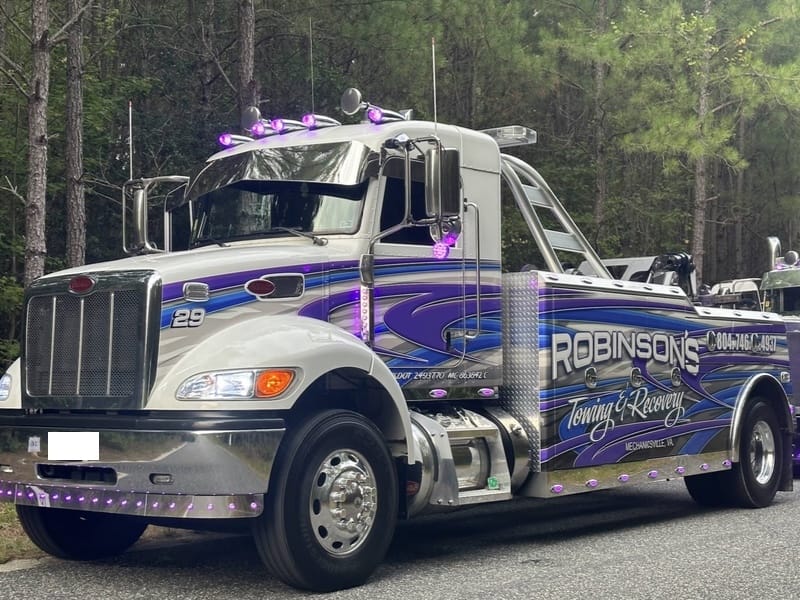
The Moment It Happens Behind the Wheel
Most drivers describe the same thing. A loud bang, then the pull. If it’s a steer tire, the truck wants to drag hard to one side. If it’s a drive or trailer tire, it turns into heavy vibration and noise that builds fast.
Staying in control in those first seconds
Hands stay firm on the wheel. No sudden braking. Ease off the throttle and let the truck slow down on its own. We’ve seen accidents get worse when drivers panic and overcorrect, especially near ramps where lanes shift and traffic stacks up without warning.
Getting the Truck to a Safer Spot
Not every breakdown gives you a wide shoulder. On parts of I-295, you’re working with very little room, and sometimes none at all. We’ve had calls where the trailer is still partly in the travel lane because the driver ran out of space.
What drivers try that makes it worse
Some try to limp to the next exit on a destroyed tire. That usually tears up the rim and sometimes the axle. Others stop too quickly in a bad position instead of rolling a few more yards to a safer stretch. We get why it happens. That moment is loud and chaotic, and decisions come fast.
What We Do When We Get There
The first thing we look at actually isn’t the truck. It’s traffic flow. We position our truck to create a buffer and give the driver some space to work. Cones go out right away, especially during early morning runs or evening traffic.
Then we assess the damage. Sometimes it’s just the tire. Other times we’re dealing with torn air lines, bent fenders, or cargo that shifted during the blowout. We’ve spent 20 to 30 minutes clearing debris before even thinking about hooking up a truck for towing job.
Common Mistakes We Keep Seeing
Drivers mean well, but a few patterns show up again and again during towing and roadside assistance calls. It usually comes down to what happens in the first minute after the tire fails.
- Driving too far after the blowout
- Braking hard immediately
- Stopping in a blind curve or narrow shoulder
- Not setting out warning triangles
- Standing too close to traffic after getting out
We’ve seen small situations turn into bigger ones because of one of these. That first minute matters more than most expect during I-295 semi towing calls.
The Cost Side Most People Don’t Think About
A single blown tire might run a few hundred dollars. But if the truck keeps moving on it, now you’re adding a rim, suspension damage, maybe even body work. We’ve seen repair costs jump into the thousands from something that started small. If we get there fast, we can usually keep it from getting worse. With I-295 semi towing, we’re often trying to stabilize the situation first. Getting the truck out of the lane, preventing another incident, and helping the driver figure out what comes next without adding more damage.
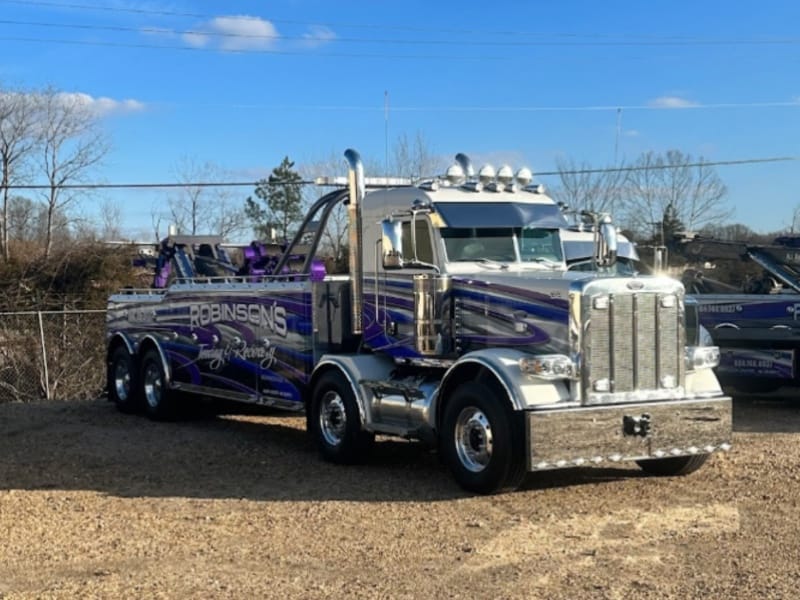
Robinson’s Towing Handling Real I-295 Semi Towing Situations on the Road
At Robinson’s Towing, most I-295 semi towing calls tied to blowouts happen during long overnight runs or early morning traffic. We see loaded trailers sitting heavy on a damaged axle, shredded rubber wrapped around components, and drivers trying to piece together what just happened after losing a tire at speed.
I-295 semi towing out here isn’t predictable. Shoulders get tight, traffic stays fast, and weather shifts don’t help. We handle the scene, get the truck secure, and deal with whatever damage the blowout left behind. Some calls are quick pulls off the roadway. Others turn into longer I-295 semi towing jobs with debris cleanup and careful positioning just to move the truck without making things worse.
FAQs
What should I do immediately after a semi tire blows at highway speed?
Keep both hands on the wheel and avoid slamming the brakes. Let the truck slow down gradually and guide it toward the shoulder. Focus on control first before thinking about stopping location.
How far can I drive on a blown semi tire?
Not far at all. Even a short distance can destroy the rim and cause more damage underneath. It is usually better to stop as soon as you can do so safely.
Are steer tire blowouts more dangerous than trailer tire failures?
Yes, steer tire failures tend to be more severe. They affect your ability to control direction right away. Trailer tires usually cause vibration and noise but can still lead to bigger problems if ignored.
What are early warning signs before a tire fails?
You might notice vibration, a thumping sound, or uneven handling. In some cases, there are no clear signs at all. That is why regular pressure checks matter more than most drivers think.
Can debris from a blown tire cause other accidents?
Yes, loose rubber and fragments can end up across multiple lanes. Other drivers may swerve or brake suddenly to avoid it. This often creates a second hazard beyond the original failure.
Does weather play a role in tire blowouts?
Hot pavement can increase internal tire temperature over long distances. Cold weather can also affect tire pressure if it drops overnight. Both conditions can contribute if the tire is already under stress.