From Tight Turns to Fast Lanes
A highway shoulder and a city block generate towing calls that look completely different by arrival. The environment shapes what kind of tow equipment rolls, how the scene is secured, and in what order work happens. Our Sandston towing team sees this contrast on every shift. Road type is part of the call information from the first ring.
A highway call introduces live lanes, high-speed traffic, and a work zone that must be built before rigging begins. A city or local call introduces tight geometry, overhead utilities, and limited staging space. Both require preparation. Each demands a different kind. And w’re ready for each one of them.
What an Active Interstate Demands Before Any Rigging Starts
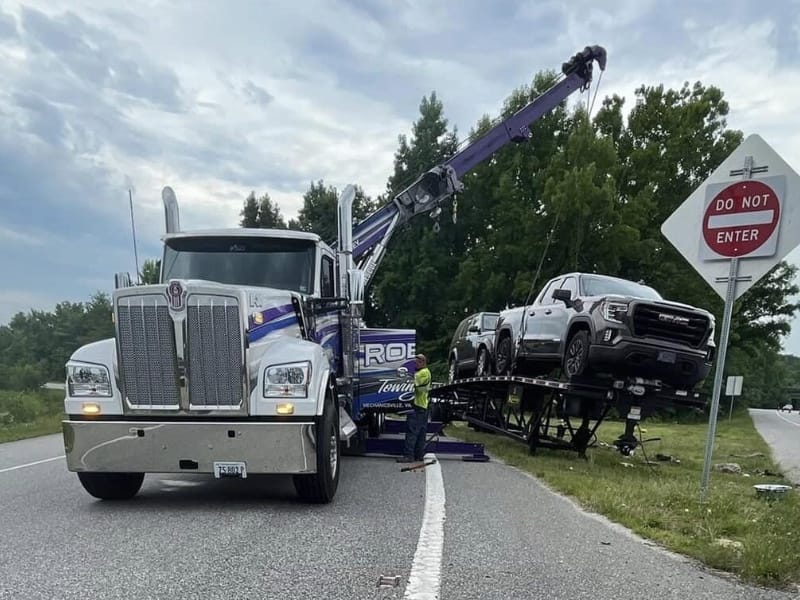
High-speed corridors require scene control before anything else. Warning lights go out before the operator leaves the cab. The truck is positioned as a barrier between the work zone and moving traffic. Rigging begins only after that buffer is in place. We also look at shoulder width, road grade, and how close the disabled vehicle sits to a live lane. Passing traffic can change the scene in seconds, so the operator needs a clear path to work and retreat. That setup may take a few extra minutes, but it helps keep the recovery organized from the start.
What a Car on a Residential or Commercial Street Signals First
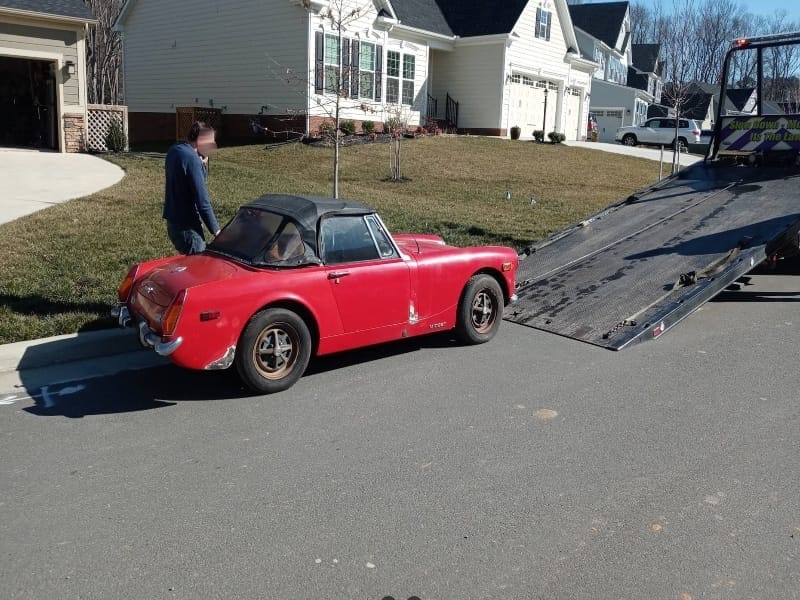
A car on a city block shifts the challenge to spatial judgment. Our operators read approach angle, overhead clearance, and nearby obstructions before positioning. A narrow driveway and an open commercial lot call for different setups. That spatial read becomes instinct over years of working varied call environments.
Equipment Requirements Change With the Road Type
Highway incidents escalate equipment needs fast. Commercial breakdowns, high-damage accidents, and VDOT Quick Clearance calls require flatbeds, heavy wreckers, and extended boom configurations. Getting lanes open quickly means having the right unit arrive, not just any unit. Our dispatchers confirm road type and incident details before any assignment goes out.
City and local calls run on different equipment logic. Compact wheel-lift units handle accessible light vehicles. Flatbeds cover all-wheel-drive cars, low-clearance vehicles, and anything with undercarriage damage. The priority on a city call is often maneuverability over lift capacity. Sandston towing dispatchers match the unit to the environment before the truck rolls.
Highway vs. City Towing: What Each Environment Requires
Here is how the two road types typically break down:
- Highway calls require high-intensity warning lights and a scene buffer before any rigging begins
- Active corridors need heavy wreckers and extended boom for commercial incidents
- VDOT Quick Clearance work prioritizes fast lane restoration with the right equipment on scene
- City and local calls need compact units suited to narrow streets and driveways
- Urban scenes require overhead and approach clearance assessment before positioning
- Every Sandston towing dispatch is matched to road type before the unit leaves
Robinson’s Towing: Sandston Towing With a Legacy Behind Every Call
Robinson’s Towing & Recovery traces its roots to “The Bus Man,” Mr. Robinson. His reputation for industry expertise built the foundation this operation still runs on. That legacy has grown into Sandston towing covering cars, buses, tractor-trailers, and heavy equipment across the East Coast. WreckMaster-trained crews and partnerships with the county sheriffs and VA State Police reflect the standing this team has earned. Participation in the VDOT Quick Clearance program adds government-verified reliability to that record.
Every Sandston towing call is answered within three rings, around the clock. Clean uniforms, trained operators, and consistent Sandston towing performance on every scene are not optional here. They are what the Robinson’s name has stood for from the beginning.
FAQ
What is the VDOT Quick Clearance program and why does it matter?
The Virginia Department of Transportation Quick Clearance program coordinates rapid removal of disabled vehicles from state roadways to restore traffic flow. Towing companies that participate work under specific standards for response time, safety protocols, and on-scene conduct. Being part of the program means the company is vetted by a government agency and held to measurable performance benchmarks.
What is WreckMaster certification and what does it cover?
WreckMaster is the towing industry’s leading training certification. It covers vehicle recovery mechanics, rigging methods, load dynamics, and scene safety at multiple levels. Higher-level certification covers complex scenarios including heavy-duty recovery and multi-vehicle incidents. Operators with WreckMaster training have passed both written and practical assessments, not just a basic licensing requirement.
Why does highway towing require a scene buffer before rigging begins?
On an active highway shoulder, the tow truck is positioned between the work zone and live traffic. That positioning creates a physical barrier that reduces exposure for the operator and any vehicle occupants still on scene. Skipping this step puts the crew in direct exposure to passing traffic throughout the recovery. The buffer is standard practice, not optional.
What types of vehicles need a flatbed tow rather than a wheel-lift?
All-wheel-drive and four-wheel-drive vehicles need a flatbed because lifting one axle while the other set of wheels rolls will turn the driveshaft and cause drivetrain damage. Low-clearance vehicles, cars with front-end or undercarriage damage, and any vehicle where partial lifting creates additional risk also go on flatbeds. A wheel-lift works for lighter, front- or rear-wheel-drive vehicles with no drivetrain damage.
What is the difference between a heavy wrecker and a flatbed?
A flatbed loads the entire vehicle onto a flat platform for transport with all four wheels off the ground. A heavy wrecker uses a boom, underlift, and cradle system to lift and tow the vehicle from the front or rear. Heavy wreckers are used for large commercial vehicles, damaged vehicles that cannot be driven onto a flatbed, and recovery work that requires boom reach. Flatbeds are the standard choice for passenger vehicles and light trucks.