
A Yard at Dawn the Day Before
Walk into a heavy haul yard the morning before a major move and the air is already busy. Trailers sit pulled out for inspection, a driver checks air lines, and a dispatcher leans into a phone with a state DOT permit office. By the time the tow truck hooks up tomorrow, the route, the permits, and the rig will have been chosen and double-checked. Planning an I-295 heavy transport job is the larger half of the work, and the haul itself only finishes what the office began.
A loaded rig is the visible result of dozens of small decisions. Roads, weights, weather, and equipment all have to line up before a single mile gets logged, and preparation is where reliable carriers separate themselves from the rest.
Start With the Load, Always
Every plan begins with the cargo. A planner needs weight, dimensions, balance points, axle distribution, and any quirks before anything else happens. A 60,000-pound switchgear cabinet rides nothing like a 60,000-pound bulldozer, and the equipment list shifts based on those details.
Photos, weight tickets, and a frank conversation with the customer remove guesswork at this stage. Without a clear picture of the load, even the best dispatcher cannot pick the right trailer or apply for the right permits.
Routing for a Heavy Rig Is Its Own Discipline
A loaded heavy haul rarely takes the shortest path. Routes for oversized or overweight loads have to clear every bridge, tunnel, and overpass along the way, and certain roads close to heavy traffic during commuter hours or holidays. Planners cross-check DOT maps and known low spots before settling on a path.
The final route is often ten or twenty percent longer than the direct line, and those extra miles are cheap compared to the cost of turning around mid-haul at a posted bridge.
Permits, Escorts, and the Paperwork Trail
Most heavy hauls need permits in every state crossed, and the paperwork is anything but quick. A typical move may require:
- Single-trip oversize or overweight permits per state
- Pilot car coverage based on load width or overhang
- Police escorts for the largest configurations
- Bridge crossing approvals from local authorities
- Travel-time restrictions on certain corridors
Each item carries its own lead time. An I-295 heavy transport run crossing into Maryland, Delaware, or beyond can mean two or three sets of paperwork that have to land in sequence before the truck can roll.
The Equipment Decision
The right trailer is the next call. Step decks, lowboys, RGNs, and multi-axle stretch trailers each serve a different kind of load, and the wrong choice on this front costs hours later. An I-295 heavy transport move for a tall industrial tank may need a lowboy with a drop deck, while a self-propelled excavator may call for an RGN.
The truck and the rigging matter just as much. Chains, straps, blocking material, and corner protectors all get pulled and inspected the day before. Drivers who carry an extra set of everything do not lose a day to a broken strap or missing pin.
The Crew and the Communication Plan
An I-295 heavy transport crew is more than a driver. A solid move usually involves a lead driver, a relief driver on longer pulls, one or two pilot car operators, and a dispatcher who can answer in real time when conditions change.
Every member of the I-295 heavy transport team knows the route, the load, and what happens if the plan needs adjusting. Radios are tested, phone numbers exchanged, and contingency stops identified before the truck ever leaves the yard.
Robinson’s Towing Delivers Professional I-295 Heavy Towing. One Plan at a Time
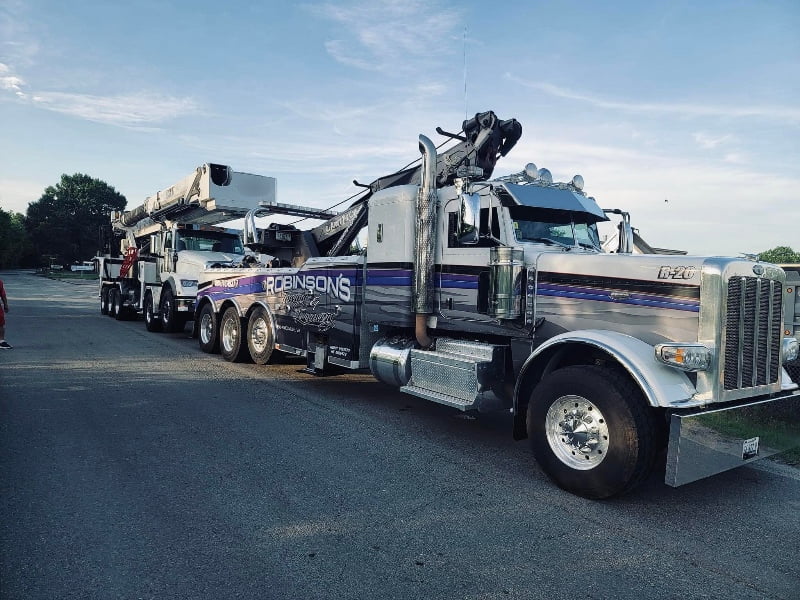
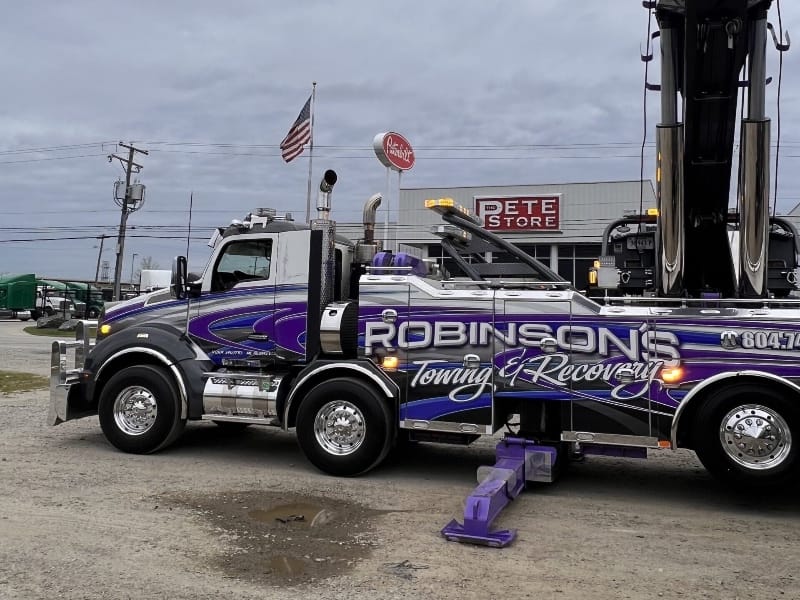
At Robinson’s Towing and Recovery, every I-295 heavy transport call starts with the same careful planning, from buses to tractor trailers to heavy equipment hauls. Our roots trace back to Mr. Robinson, “The Bus Man,” and the reputation he built across the East Coast. Today we carry that work forward with Wreckermaster-trained operators, a fleet built for tough jobs, and 24/7 dispatch that answers within three rings.
We are also a VDOT Quick Clearance participant and work closely with Hanover County, Henrico County, and the Virginia State Police on incidents that need fast, careful response. If you have a heavy transport that needs planning, equipment, and the right people behind it, our Mechanicsville team is ready to take the call.
Frequently Asked Questions
What information should a customer have ready before booking a heavy haul?
A good starting list includes weight, dimensions, photos of the load, pickup and delivery addresses, and any time windows that matter. Knowing the cargo’s center of gravity, tie-down points, and any travel restrictions helps the dispatcher quote accurately and move the booking forward without delay.
How are heavy haul rates usually calculated?
Rates blend several inputs: total mileage, permit fees per state, pilot car days, escort hours, deadhead miles to and from the load, and the type of trailer required. Loads needing police escorts, holiday routing, or hazmat handling cost more than standard moves. Most carriers will provide a written quote once they have the load details.
What is a wreckermaster certification and why does it matter?
Wreckermaster is one of the most rigorous training programs in the towing industry. Operators learn advanced rigging, recovery, and load handling skills that go well beyond the basics. A carrier with wreckermaster-trained staff is better equipped to manage unusual loads, awkward recoveries, and complex scenes.
What happens if a state denies a permit application?
The carrier reroutes around the denied state or works with the permitting office to adjust the load configuration. Common fixes include splitting the load, changing trailers, or moving the trip to a different day. Denials can add days to a schedule, which is one reason early booking saves real time.
Does a heavy or oversized load need different insurance coverage?
Yes. Most heavy haul carriers carry higher cargo and liability limits than standard freight haulers, and many add specific coverage for oversized or high-value equipment. Customers shipping unique or irreplaceable cargo often request additional inland marine coverage on top of the carrier’s policy.
Can a heavy transport be expedited if a project changes?
Sometimes, but expedited heavy hauls are more constrained than expedited standard freight. Permits, escorts, and pilot cars cannot be conjured on demand, and many states will not issue same-day permits. The faster the customer can confirm details, the more options the carrier has to expedite a route.