
When Trucks Lose Balance on the Road
A tractor trailer rollover usually starts long before the wheels leave the pavement. In many cases, the real trouble begins with speed, load balance, road conditions, or a split-second correction that pushes the truck past its limit. Our tow truck operators often see that pattern in US-301 semi towing calls, where the crash scene points to several problems working together.
A tractor trailer carries weight high off the ground, which makes it more vulnerable in curves, exit ramps, and quick lane changes. The truck may feel stable for miles, then suddenly lean hard to one side when the load shifts or the driver turns too sharply.
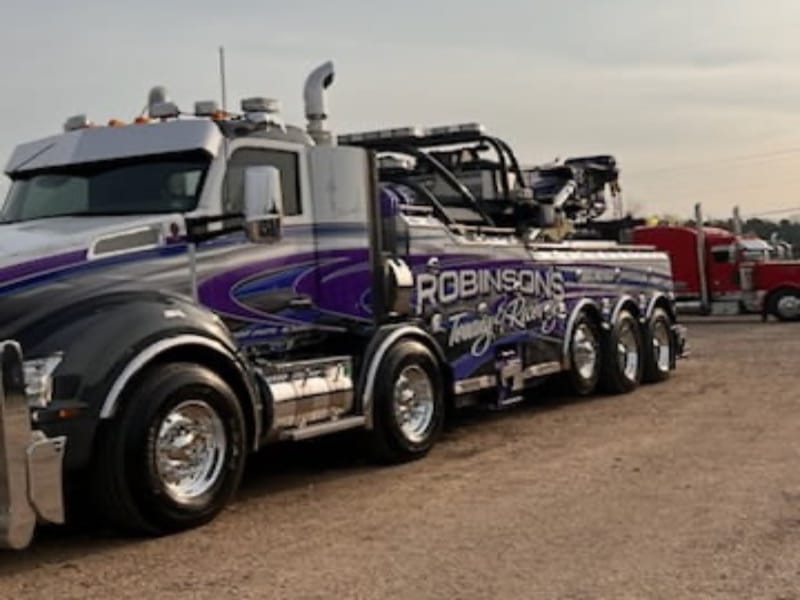
Speed Plays a Bigger Role Than Many Drivers Realize
A fully loaded tractor trailer needs far more time and distance to react than a passenger vehicle. If we enter a curve at a speed that feels normal in a car, the trailer can begin to tip before we have time to correct it. The weight inside the trailer continues to move even after the steering wheel straightens.
Highway ramps create many rollover crashes because the posted speed assumes ideal conditions. Rain, strong wind, heavy freight, or worn tires can change those conditions in seconds. Hard braking in the middle of a curve shifts even more weight toward one side of the trailer.
Cargo Problems Can Trigger a Rollover
An uneven load creates one of the biggest dangers on the road. Cargo placed too high, too far to one side, or too far toward the rear makes the truck harder to control. The trailer may begin to sway before the driver realizes anything has changed.
Loose cargo creates another risk. During a turn, the freight can slide and slam against one wall of the trailer. That sudden movement can throw the truck off balance almost instantly.
- Load heavy cargo low in the trailer
- Secure freight before leaving
- Recheck straps and tie-downs during long trips
- Slow down before curves and exit ramps
- Leave extra distance during rain or high winds
Conditions That Increase the Risk
Weather changes the road surface and reduces traction. Wet pavement, ice, gravel, and strong crosswinds all make a rollover more likely. A tall trailer catches wind easily, especially on bridges, open highways, and rural roads.
Fatigue and distraction also play a major role. Long hours behind the wheel slow reaction time and make it harder to judge speed or distance. A driver may miss a warning sign, drift toward the shoulder, or brake too late entering a curve.
Equipment Problems Add More Danger
Mechanical issues can push a truck toward a rollover even if the driver reacts correctly. Tire failures, worn suspension parts, weak brakes, and steering problems all reduce stability. A blown tire often causes a sudden steering correction, and that sharp movement can tip the trailer.
Routine inspections lower that risk. Tires, brakes, wheel bearings, suspension parts, and trailer connections should be checked before every trip. Many serious crashes begin with a small problem that could have been caught in a few minutes.
How to Reduce Rollover Risk
A rollover risk rises when several factors come together at once. Excess speed, poorly balanced freight, sudden braking, and sharp steering inputs all place extra force on the truck. The same issues appear in many US-301 semi towing incidents, especially on roads with curves, merging traffic, and changing pavement conditions.
Preventing a rollover starts with reading the road early and slowing down before reaching a problem area. Lower speeds give the trailer more stability and give us more time to react. Careful attention to cargo weight and placement matters just as much, since the load inside the trailer affects how the truck leans and responds in every turn. Those extra seconds often prevent the need for US-301 semi towing later in the trip.
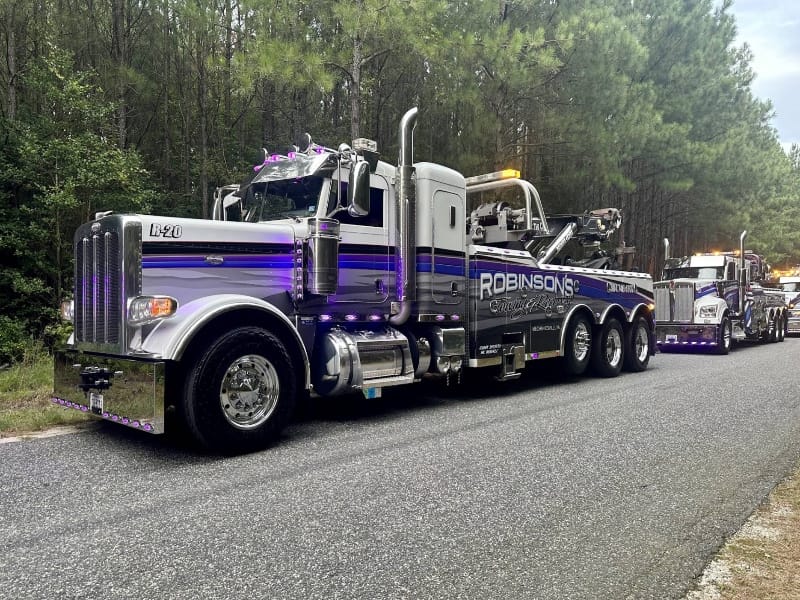
How Robinson’s Towing Handles US-301 Semi Towing
At Robinson’s Towing, we respond to US-301 semi towing situations with heavy-duty wreckers and a recovery plan based on the condition of the truck, trailer, and cargo. Every rollover scene creates a different challenge. A loaded trailer in a ditch requires a different approach than a tractor lying across several lanes of traffic.
After the recovery, we also talk with drivers and fleet managers about what may have caused the crash. Many US-301 semi towing cases trace back to the same issues: excess speed, shifting freight, poor weather, or missed maintenance. Looking closely at those causes helps reduce the chance of another rollover in the future. But in case you do need to call us for a US-301 semi towing job, we’re always ready to roll!
FAQ
What is the most common cause of a tractor trailer rollover?
Speed is one of the most common factors. A truck that enters a curve, exit ramp, or sharp turn too quickly can lean past its balance point. Cargo placement, weather, and sudden steering corrections often add to the problem.
Can an empty trailer roll over more easily than a loaded one?
Yes. An empty trailer weighs less, which makes it more vulnerable to strong wind and sudden steering movements. A loaded trailer can also roll over if the cargo sits too high or shifts during a turn.
How does cargo placement affect rollover risk?
Cargo changes the center of gravity inside the trailer. Heavy freight placed too high or too far to one side makes the truck less stable. Freight should stay low, balanced, and secured tightly to reduce movement during travel.
What should a driver do if a trailer starts to lean?
The best response is to stay calm and avoid jerking the steering wheel. Ease off the accelerator, keep both hands on the wheel, and slow down gradually. Sharp corrections often make the lean worse.
Do weather conditions increase the chance of a rollover?
Rain, ice, snow, gravel, and strong crosswinds all increase rollover risk. Slippery pavement reduces tire grip, while strong wind can push against the side of the trailer and make it harder to control.
How can drivers lower the risk of a tractor trailer rollover?
Drivers can reduce rollover risk by slowing down before curves, checking cargo balance, inspecting tires and brakes, and staying alert behind the wheel. A few extra minutes spent preparing the truck often prevent much larger problems later.