
Separating Towing Fact from Damage Fiction
Someone’s car broke down, and before we even hook it up and tow, they ask if towing will ruin their transmission. The worry usually comes from something they heard years ago or from a friend who swears a tow caused a costly repair. Laurel towing and transmission damage have become linked in conversation, even though the real story is far more detailed.
We want to clear up the confusion. Towing, when done correctly, does not automatically harm a transmission. Problems usually happen when a vehicle is moved the wrong way or without the right preparation. That is why we take the time to explain what we are doing and why it matters for each vehicle we tow.
How Transmissions Actually Get Damaged
Automatic transmissions rely on fluid circulation to stay lubricated and cool. When the engine is off, that circulation slows or stops. If a vehicle with its drive wheels on the ground gets pulled for a long distance, internal parts can heat up and wear down. That is where the stories about towing and transmission damage started.
We prevent that risk by choosing the correct towing method. Front wheel drive, rear wheel drive, and all-wheel drive vehicles each require a specific approach. We check the drivetrain before we load anything, and we adjust our setup to match the manufacturer guidelines.
The Role of Proper Equipment and Setup
Not all towing situations look the same. A short local tow across Laurel is different from a longer transport to a repair shop outside the area. We plan for distance, vehicle type, and condition before we secure it.
Here is what we focus on during every Laurel towing call:
- Identifying which wheels power the vehicle
- Using a flatbed when required
- Securing the car at approved tie down points
- Confirming the transmission is in the correct position
These steps reduce the risk of towing and transmission damage. They also protect suspension components and body panels from strain.
Flatbed Towing and Why It Matters
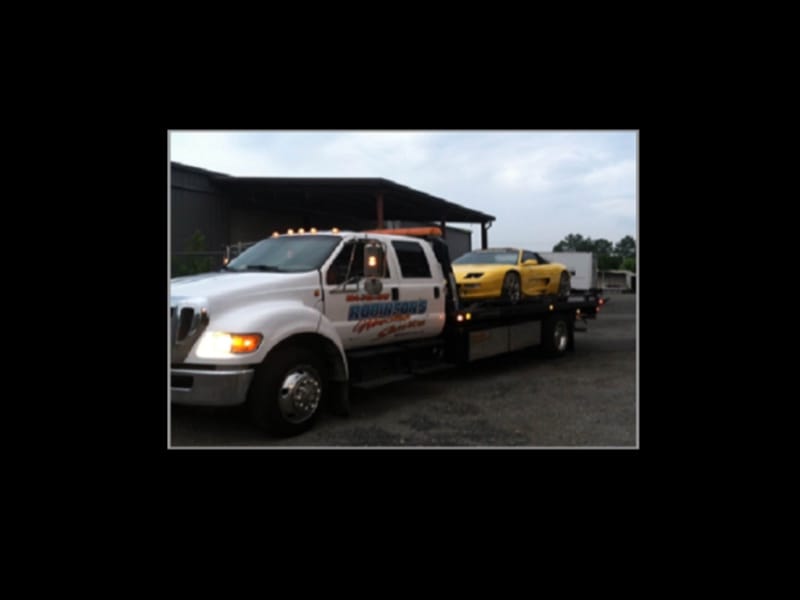
Flatbed trucks play a major role in preventing towing and transmission damage. When we load a vehicle fully onto a flatbed, none of its wheels touch the road. That means no internal transmission parts move while the engine is off. For many modern vehicles, this is the recommended method.
Some towing situations that involve all-wheel drive systems, flatbeds are often the safest option. All wheel drive vehicles can suffer drivetrain stress if one set of wheels spins while the others stay still. Lifting the entire vehicle removes that concern.
Manual vs Automatic Vehicles
Manual transmissions operate differently from automatics, yet they still require care. Even though manuals do not depend on fluid pressure in the same way, improper towing can still cause wear.
We look at the owner’s manual guidelines for both types. Some vehicles allow short distance towing with drive wheels lifted. Others call for full transport on a flatbed. By following those instructions, we limit the chance of towing and transmission damage and keep the vehicle’s warranty in mind.
Short Distance vs Long-Distance Towing
Distance affects risk. A vehicle pulled just a few feet onto a flatbed faces minimal exposure. A vehicle dragged for miles with drive wheels turning can experience serious heat buildup inside the transmission.
During Laurel towing jobs, we evaluate how far the vehicle needs to travel. If the route is longer or involves highway speeds, we lean toward methods that eliminate drivetrain movement. That approach reduces the chance of towing and transmission damage and keeps repair costs from climbing later.
Trust Robinson’s for Transmission-safe Laurel Towing
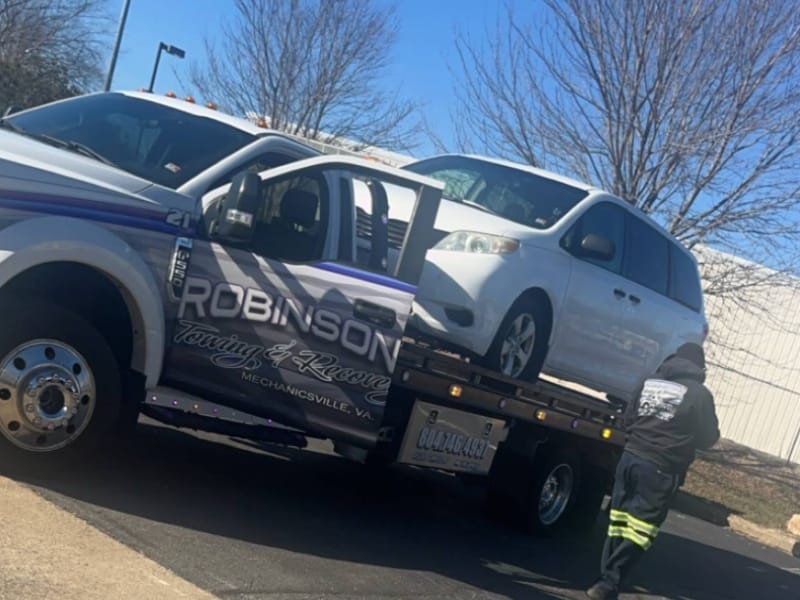
At Robinson’s Towing, we handle Laurel towing calls every day, and we see how misinformation spreads. People assume that any tow equals transmission trouble. In reality, towing and transmission damage usually stem from improper handling, not the act of towing itself.
We take time to assess each vehicle before we move it. Our Laurel towing process centers on matching the correct method to the specific drivetrain. By focusing on proper loading, secure tie downs, and manufacturer guidelines, we reduce the likelihood of towing and transmission damage. Robinson’s Towing approaches every Laurel towing request with care and attention to detail so drivers can make informed decisions about their vehicles.
FAQ
Can towing ruin my transmission?
Towing can damage a transmission if the vehicle is moved incorrectly. Problems usually happen when the drive wheels stay on the ground and rotate for long distances while the engine is off. Using the proper towing method prevents internal heat buildup and unnecessary wear.
Is flatbed towing better for my car?
In many cases, yes. A flatbed keeps all four wheels off the road, which prevents drivetrain movement during transport. This method works especially well for all wheel drive vehicles and many modern automatic transmissions.
Does putting a car in neutral protect the transmission during a tow?
Not always. Some vehicles still require the drive wheels to be lifted or the entire vehicle placed on a flatbed. The safest approach depends on the drivetrain and the manufacturer’s guidelines.
Are automatic transmissions more at risk than manual ones?
Automatic transmissions tend to face higher risk during improper towing because they rely on fluid circulation when the engine runs. Manual transmissions can still experience wear if towed incorrectly. Both types require the correct setup before transport.
How far can a vehicle be towed without causing damage?
There is no universal distance that applies to every vehicle. Some cars can handle short distances with drive wheels lifted, while others require full transport. The owner’s manual provides the clearest direction for each model.
How can I make sure my car is towed the right way?
Ask the towing provider what method they plan to use and why. Confirm that they check the drivetrain and follow manufacturer recommendations. A clear explanation of the process shows they are taking the right precautions.